
Medicinal Plants
-

How to Use Mahanarayan Oil for Osteoarthritis (Oral Use)
Most people are familiar with Mahanarayan Oil as a massage oil for joint pain. But what’s truly remarkable is how…
Read More » -

Heal Your Gut, Heal Your Mind: Backed by Science & Ayurveda
Have you ever felt mentally foggy or emotionally drained after eating a heavy meal? Or calm and energised after a…
Read More » -
White Tongue in Ayurveda: Causes, Signs, and Remedies
A white-coated tongue may seem like a minor issue, but in Ayurveda, it is a major diagnostic sign. The tongue…
Read More » -
Signs of Proper Digestion According to Ayurveda
In Ayurveda, digestion is considered the cornerstone of health. When your body digests food efficiently, it not only nourishes the…
Read More » -
Appetite Rule in Ayurveda
Respecting your appetite is a foundational principle of Ayurvedic nutrition. Eating in accordance with your body’s hunger signals promotes health,…
Read More » -
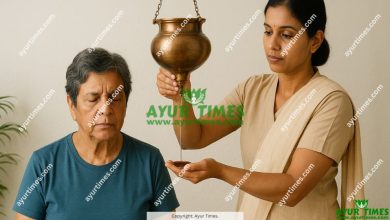
Ayurvedic Treatment for Parkinson’s Disease
Parkinson’s Disease (PD) is a progressive neurodegenerative disorder characterised by bradykinesia (slowness of movement), resting tremors, rigidity, and postural instability.…
Read More » -

Brain Fog: A Comprehensive Guide from Psychological and Ayurvedic Perspectives
Brain fog is a term used to describe a state of mental confusion, reduced focus, and lack of clarity. It…
Read More » -
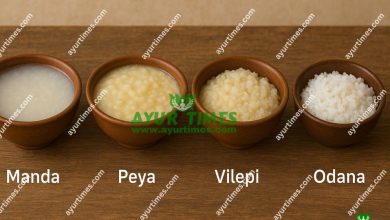
Types of Rice Preparations in Ayurveda: Understanding Manda, Peya, Vilepi, and Odana
Rice, a staple in many cultures, holds a significant place in Ayurveda, not only as a source of nourishment but…
Read More » -
Magnolia Champaca (Champak)
Magnolia champaca, also known as champak, is a large evergreen tree native to Southeast Asia, renowned for its fragrant yellow…
Read More » -
The Truth About Ashwagandha for Weight Loss: What the Ayurveda Says
Ashwagandha is an adaptogenic herb that has been traditionally used in Ayurvedic medicine to improve stress and anxiety. In recent…
Read More »